Tiger Watercolor Clipart Illustrations for Branding
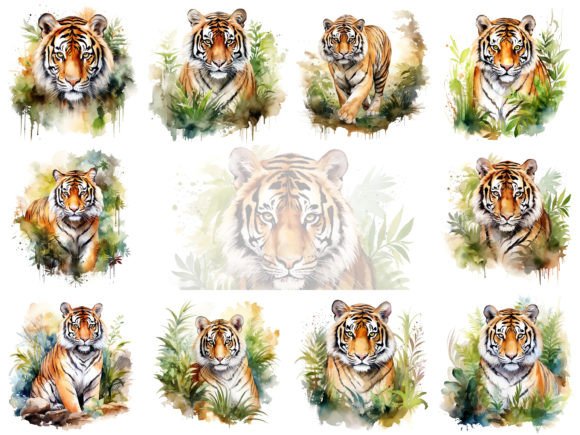
When evaluating a new graphic design asset for a client project, my first question is always about emotional resonance. Does this visual communicate the brand’s soul before a single word is read? Upon reviewing the Tiger Watercolor Clipart Images Set, the immediate impression is one of organic warmth and spirited elegance. Unlike rigid vector graphics or overly cartoonish clipart, these illustrations possess a fluid, hand-painted quality that suggests authenticity. For a local business, this mood is invaluable. It strikes a delicate balance between playful energy and artisanal sophistication, making it particularly suitable for brands that want to appear approachable yet premium.
This specific collection evokes a sense of wild beauty and natural confidence. As a brand designer, I see this fitting perfectly for a boutique skincare line using botanical ingredients, a specialty tea shop focusing on exotic blends, or a handmade children’s clothing brand that values durability and whimsy. The watercolor texture softens the intensity typically associated with tiger imagery, transforming it from aggressive to protective and nurturing. This nuance is critical for small business branding where building customer trust and emotional connection is just as important as product recognition.
Elevating Packaging Design and Product Labels
In a recent conceptual project for an artisanal candle company, I tested how these illustrations perform in physical packaging design. The true value of this graphic design asset lies in its versatility across different print applications. For product labels, the tiger motifs serve as excellent secondary graphics or border elements rather than overwhelming centerpieces. When placed on a matte cream label stock, the watercolor edges blend seamlessly, creating a high-end shelf appeal that competes with major commercial brands.
For unboxing experiences, which are vital for handmade businesses and e-commerce sellers, these images shine on thank-you cards and tissue paper patterns. I found that using a singular, detailed tiger illustration as a hero graphic on a hang tag creates a memorable tactile moment for the customer. It transforms a simple purchase into a curated experience. Furthermore, because these are PNG designs with transparent backgrounds, integrating them into Canva templates for custom stickers or box sleeves is efficient without sacrificing professional branding standards. The key is scale; these illustrations retain their brushstroke details even when resized for smaller jar labels, provided you maintain adequate resolution for print.
Strategic Applications for Marketing Visuals and Digital Presence
Beyond physical goods, the Tiger Watercolor Clipart Images Set offers significant utility for social media graphics and web design. In editorial design for Instagram or Pinterest, these visuals act as organic dividers or background textures that break up text-heavy promotional ads. For a coffee shop launching a seasonal "Wild Roast" campaign, overlaying a semi-transparent tiger wash behind menu items adds thematic depth without compromising readability.
From a visual hierarchy perspective, these illustrations guide the eye naturally. They work exceptionally well in website banners to establish a brand story above the fold. However, they are most effective when used to support copy, not replace it. For digital products or printable design assets sold by creative entrepreneurs, this set provides a cohesive theme that can tie together a diverse product range. Whether used in email newsletters or Facebook ad creatives, the consistent artistic style reinforces brand identity across all touchpoints, ensuring your marketing visuals feel unified and intentional.
Where to Exercise Caution in Commercial Design
While versatile, this asset requires strategic restraint. During my evaluation, I noted specific scenarios where these illustrations should be used carefully. For formal corporate branding or luxury minimalist brands, the inherent playfulness of watercolor tigers might clash with a desire for austere seriousness. Similarly, on crowded product packaging featuring extensive ingredient lists or legal disclaimers, adding detailed wildlife illustrations can create visual noise. Important regulatory text must always take precedence over decorative elements.
I also advise against using these on low-contrast backgrounds. Watercolor relies on subtle tonal variations; placing a light-wash tiger on a pale yellow label will result in poor legibility and a cheap appearance. Additionally, if your brand voice is strictly modern or tech-forward, the traditional medium of watercolor may send mixed signals. Always ensure the artistic style aligns with your core demographic's expectations. For very small labels, such as lip balm tubes, the intricate details of the tiger may get lost in printing, so simpler crop versions or solid-color adaptations would be preferable.
Essential Pre-Launch Checks for Professional Branding
Before committing this Tiger Watercolor Clipart Images Set to a final production run, rigorous testing is non-negotiable. As part of my standard workflow for any commercial design project, I recommend the following practical checks:
- Print Quality Verification: Never assume screen resolution equals print quality. Test print the illustrations at actual size on your intended paper stock to check for pixelation or color shifting.
- Typography Pairing: Test the clipart beside various font styles. I found these illustrations pair beautifully with organic serif fonts and clean sans serifs but can compete with highly ornate script fonts. Ensure the text remains the primary communicator.
- Black and White Conversion: Check how the artwork looks in grayscale. If you plan to use embossing, foil stamping, or single-color printing for cost efficiency, the illustration must hold its form without color reliance.
- Competitor Analysis: Compare your mockups against local competitors. If three other bakeries use similar wildlife watercolors, you risk blending in. Use these assets uniquely to maintain distinctiveness.
- Licensing Confirmation: This is paramount. Before using any digital product for client work or physical sales, verify the commercial license terms. Ensure the agreement covers product packaging, resale, and marketing usage to protect your business legally.
- Mockup Testing: Utilize realistic product mockups to visualize the final result. Seeing the tiger illustration wrapped around a curved bottle often reveals placement issues that flat design files hide.
Ultimately, the Tiger Watercolor Clipart Images Set is a robust tool for creative entrepreneurs who understand the power of narrative in design. It is more than just decoration; it is a vehicle for storytelling that can elevate a local business from generic to memorable. By applying these professional evaluations and respecting the medium's strengths and limitations, you can leverage these illustrations to build a stronger, more emotionally resonant brand identity that truly connects with your audience. Remember that successful branding is not just about beautiful assets, but about the thoughtful, strategic application of those assets to solve real business challenges and delight customers.