Valentine's Day Arrow Watercolor Clipart Review
As a professional embroidery designer and product reviewer, I approach every new digital asset with a critical eye. When evaluating Valentine s Day Arrow Watercolor Clipart, my first thought isn't just about how pretty the illustration looks on a screen; it is about how those soft watercolor washes will translate into thousands of physical stitches. For fellow Etsy sellers, apparel decorators, and makers, the gap between a digital file and a finished product is where profit and reputation live or die. This review breaks down exactly how this specific clipart performs when moved from the design software to the embroidery hoop.
First Impressions: Mood and Stitch Translation
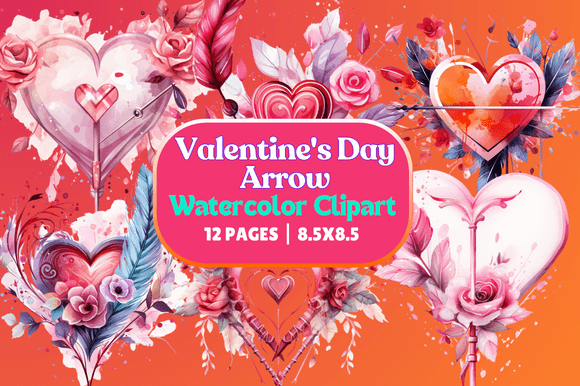
Visually, this Valentine s Day Arrow Watercolor Clipart strikes a balance between rustic charm and modern romance. The watercolor aesthetic implies soft edges, color blending, and an organic flow that contrasts sharply with the rigid grid of traditional machine embroidery. As an illustration, it evokes a handmade, artisanal feel that is currently trending in the personalized gift market. However, for us as embroiderers, "watercolor" is a code word for complexity.
The shape of the arrow provides a necessary structural backbone. In embroidery, having a defined linear element helps anchor the design, especially when surrounded by softer, less defined fill areas. The layout suggests versatility; it is directional but balanced enough to work as a standalone motif or a complementary accent. For a craft business owner, this visual personality signals "boutique quality" rather than "mass-produced," which is essential for commanding higher price points on custom apparel and holiday embroidery projects.
Real-World Application: The Custom Sweatshirt Test
To truly evaluate this asset, I mentally placed it into a real-life production scenario: creating a batch of unisex cream-colored sweatshirts for a Valentine’s Day pop-up shop. This is a high-stakes project because fleece fabrics are textured, and customers expect softness, not bulletproof vests.
In this context, the Valentine s Day Arrow Watercolor Clipart serves as an excellent left-chest placement or a centered yoke design. The arrow’s linear nature allows it to follow the garment's natural drape without distorting. If I were digitizing this for a sweatshirt, I would utilize the arrow shaft as a guide for running stitch outlines to define the shape before laying down any complex fill stitches. The watercolor effect would require a specialized digitizing approach, likely using varied stitch lengths and multiple thread colors blended in layers to mimic the paint bleed.
For an embroidered patch application, this design also shines. The distinct arrow shape creates a natural boundary for merrowing or satin stitch borders. Patches are forgiving regarding fabric texture, making them a safer bet if you are unsure how the watercolor details will render on difficult materials. Whether used for a tote bag design or baby embroidery on a onesie, the key is maintaining the integrity of the arrow's point and fletching while allowing the watercolor body to remain artistic rather than photographic.
Navigating Fabric Challenges and Technical Limits
While the aesthetic is beautiful, practical execution requires caution. Watercolor-style illustrations often suffer when scaled down too small. If you attempt to shrink this Valentine s Day Arrow Watercolor Clipart for a tiny 2x2 inch hoop size, the subtle color transitions will turn into muddy blocks of solid fill stitch. The detail level required to replicate a watercolor wash demands space.
- Textured Fabrics: On terry cloth towels or heavy canvas tote bags, the delicate watercolor nuances may get lost in the fabric weave. You may need to increase stitch density or add an underlay to create a smooth canvas for the top stitches.
- Stretchy Knits: For t-shirts and lightweight knits, the weight of dense watercolor fills can cause puckering. Proper stabilizer choice is non-negotiable here. A cut-away stabilizer is usually required to support the design long-term without distorting the garment.
- Dark Fabrics: Watercolor relies on transparency and light. Stitching this onto black or navy fabric will require a white underbase, which adds significant density and stiffness. Always test on a dark scrap first to ensure the design doesn't become too heavy or lose its ethereal quality.
- Curved Surfaces: If placing this on a cap, be mindful of the arrow's length. Curved brims distort horizontal lines. You may need to arc the design digitally before generating your embroidery file to compensate for the curve.
Impact on Product Value and Customer Perception
Using high-quality illustrations like this directly influences buyer engagement. In the saturated market of Valentine’s merchandise, generic heart vectors are everywhere. A watercolor arrow offers differentiation. It suggests that the maker has curated their design assets carefully. When a customer sees a finished product where the thread colors blend seamlessly to recreate a painted look, it builds trust in your craftsmanship.
However, poor execution destroys value just as fast. If the stitch density is too high, the fabric buckles. If the registration is off, the arrow looks broken. Professionalism in commercial embroidery comes from knowing when to simplify a design to suit the medium. Sometimes, interpreting the Valentine s Day Arrow Watercolor Clipart means stylizing it for thread rather than forcing a pixel-perfect copy. Customers buy the feeling of the design, not a forensic reproduction of the digital file.
Essential Designer Notes Before You Hoop
Before you commit this design to a commercial run or a precious personalized gift, follow these practical steps to ensure success:
- Verify Licensing: Confirm whether your purchase includes commercial rights for finished products versus digital redistribution. As an Etsy seller or small shop product creator, protecting your business from IP issues is paramount.
- Test Stitch Out: Never skip this step. Print a template at actual size to check hoop size compatibility. Stitch on the exact fabric you intend to sell. Evaluate the hand-feel; if it is too stiff for baby embroidery or apparel, reduce the density.
- Thread Color Matching: Watercolor designs rely heavily on shading. Compare your physical thread chart against the digital file. What looks like a soft pink gradient on screen might require three distinct rose-colored threads to achieve in real life.
- Mockup Validation: Use printable mockups to visualize placement before stitching. Check how the arrow interacts with seams, pockets, or other text. Ensure the design assets complement your brand consistency rather than clashing with existing inventory.
- Check File Integrity: Whether you receive a pre-digitized embroidery file or the raw illustration for custom digitizing, inspect the artwork for jagged edges or low resolution. Clean vector lines make for cleaner stitch paths.
Final Verdict for Makers
The Valentine s Day Arrow Watercolor Clipart is a versatile, mood-rich asset that belongs in the toolkit of serious embroiderers and creative entrepreneurs. It bridges the gap between digital art and tactile craft beautifully, provided you respect the technical limitations of translating paint to thread. By approaching this design with a practical mindset—testing on relevant fabrics, adjusting for texture, and prioritizing wearability—you can transform a simple illustration into a best-selling handmade product that resonates with customers seeking authentic, artistic Valentine’s decor.