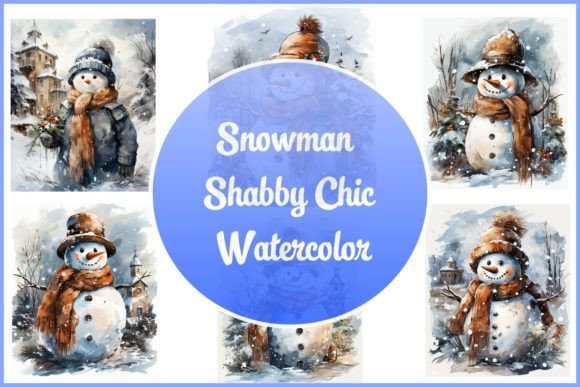
6 Shabby Chic Watercolor Snowman JPG Review
First Impressions: Capturing Softness in Digital Form
When I first opened the 6 Shabby Chic Watercolor Snowman JPG, my immediate reaction was not about stitch counts or digitizing paths, but about mood. As an experienced designer who reviews countless Illustrations for potential embroidery adaptation, I look for artwork that translates emotion into thread. This specific image succeeds because it avoids the harsh, cartoonish lines often associated with holiday clip art. Instead, it offers a soft, painterly aesthetic that feels vintage and nostalgic. The watercolor edges are diffuse rather than defined, which presents both a beautiful opportunity and a technical challenge for any machine embroidery design project.
For a creative entrepreneur or Etsy seller, this visual style is gold. It signals "handmade" and "boutique quality" instantly. However, as a reviewer evaluating this for real-world application, I have to look past the pretty pixels. A JPG is a raster image, meaning it is composed of colored pixels rather than vector paths or stitch data. My primary assessment is how well this particular watercolor texture will inform the digitizing process. The soft gradients suggest that a simple satin stitch outline would ruin the effect. This artwork demands a more sophisticated approach, likely utilizing complex fill stitches or even an applique design foundation to capture that shabby chic essence without looking stiff.
Real-World Application: The Holiday Tote Bag Test
To truly evaluate the viability of the 6 Shabby Chic Watercolor Snowman JPG, I mentally placed it onto a natural canvas tote bag intended for a small shop holiday collection. Tote bags are a staple embroidery project for makers because they offer a stable, medium-weight surface that holds detail well. In this scenario, the snowman’s muted color palette would pair beautifully with unbleached cotton, creating a cohesive, rustic aesthetic that customers actively seek during the winter season.
However, translating this JPG into a tote bag design requires careful planning. Watercolor illustrations rely on transparency and blending, whereas embroidery relies on layering and coverage. If I were digitizing this for production, I would avoid trying to replicate every brushstroke. Instead, I would use the JPG as a background guide to create a stylized interpretation. Perhaps the snowman’s body uses a textured fill stitch to mimic paper grain, while the scarf utilizes a variegated thread to suggest watercolor bleeding. For a custom apparel piece like a sweatshirt, this design would serve as a perfect centerpiece, but I would advise keeping the placement centered on the chest rather than wrapping around seams, as the soft visual nature of the art could get lost in garment construction lines.
Evaluating Versatility Across Products
Beyond totes and sweatshirts, this illustration shows strong promise for several other categories:
- Baby Embroidery: The gentle, non-aggressive styling makes it ideal for nursery decor or baby blankets. The lack of sharp contrast is soothing and fits the "shabby chic" nursery trend perfectly.
- Holiday Embroidery: Unlike traditional bright red and green designs, this muted snowman appeals to modern farmhouse and neutral holiday aesthetics, broadening your potential customer base.
- Printable Mockups: Even before stitching, this high-quality JPG serves as excellent digital product preview material. You can use it to create listing photos for personalized gifts, helping buyers visualize the final handmade product.
- Embroidered Patch: With the right merrowed edge or satin border, this snowman could be adapted into a patch, though the internal details would need simplification to remain legible at smaller sizes.
Technical Caution Zones: Where to Pause and Plan
While the 6 Shabby Chic Watercolor Snowman JPG is visually stunning, practical experience dictates caution in specific applications. Watercolor art is deceptive; what looks seamless on screen can become a dense, bulletproof patch of thread if not managed correctly. I strongly advise against using this design on stretchy knits or thin fabrics without significant modification. The implied density of watercolor shading often leads digitizers to increase stitch density excessively, which can cause puckering on jersey knits or tear through delicate linens.
Dark fabrics are another risk area. This illustration likely relies on white or light negative space to define the snowman’s form. On a navy or black sweatshirt, those defining highlights disappear unless you add a white underlay or change the color scheme entirely. Always test your thread colors against the actual fabric, not just the screen. Furthermore, be wary of tiny lettering or intricate facial features often found in shabby chic art. These elements rarely survive the transition from pixel to stitch at small hoop sizes. If you plan to use this on a cap or sleeve cuff, expect to simplify the design significantly, removing background washes and focusing only on the main character silhouette.
Designer Notes for Successful Execution
Before you commit this digital embroidery file to a commercial run or a cherished gift, follow these professional protocols:
- Verify Licensing: Since this is a JPG illustration, confirm whether you have the rights to digitize it for commercial embroidery. Some artists allow personal use but prohibit selling finished products or the digitized file itself.
- Test on Scrap Fabric: Never run a new design on a final product first. Stitch out on similar fabric texture to check registration and density.
- Stabilizer Selection: Watercolor-style fills can be heavy. Use appropriate stabilizer (cut-away for knits, tear-away for wovens) to support the stitch load.
- Contrast Check: View your mockup in grayscale. If the snowman disappears against the background in black and white, it lacks sufficient value contrast for embroidery.
- Simplify for Scale: If resizing down, remove decorative accents and background splatters. Retain only the core shapes to ensure clarity.
Impact on Brand Value and Customer Trust
Using thoughtfully curated assets like the 6 Shabby Chic Watercolor Snowman JPG elevates a craft business beyond generic holiday merchandise. Customers today are savvy; they recognize mass-produced, clip-art-heavy items versus those with artistic integrity. When you select illustrations that possess genuine character and adapt them with technical respect, you build brand consistency. Your shop becomes known for a specific aesthetic—soft, vintage, and high-quality—rather than just being another vendor selling snowmen.
This attention to detail directly influences buyer engagement. A listing featuring a well-adapted watercolor design tells a story. It suggests that the maker cares about the source material and the final tactile result. Whether you are creating a personalized gift for a client or stocking your own boutique, the translation of this art form into thread adds perceived value. Just remember that the JPG is merely the starting point. Your expertise in selecting the right hoop size, managing tension, and respecting the fabric is what ultimately transforms a digital illustration into a treasured keepsake. Always treat the source art with respect, and your finished embroidery will reflect that professionalism.