Black Boys Watercolor Clipart: An Embroidery Review
As a professional embroidery designer and product reviewer, I approach every new asset with a critical eye toward stitchability. When evaluating Black Boys Watercolor Clipart, my primary concern is not just the aesthetic beauty of the digital illustration, but how those soft watercolor edges and delicate shading will translate into thread on fabric. For Etsy sellers, apparel decorators, and makers focusing on inclusive representation, finding high-quality imagery that respects the subject matter while remaining functional for production is essential. This review breaks down the practical realities of adapting these specific illustrations into tangible, sellable goods.
First Impressions and Emotional Resonance
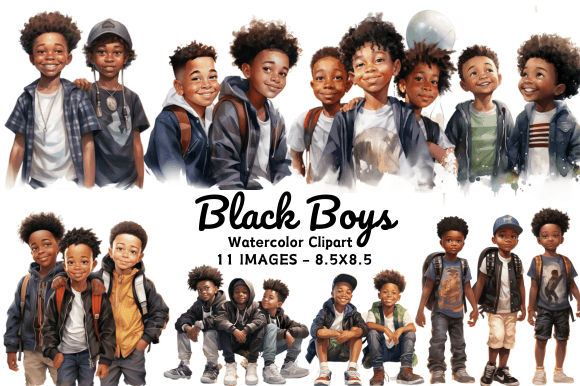
The immediate strength of this collection lies in its mood. Unlike rigid vector art or harsh cartoon outlines, these illustrations possess a gentleness that is often difficult to achieve in machine embroidery. The watercolor style suggests softness, nostalgia, and warmth. From a design perspective, this creates an instant emotional connection, which is vital for personalized gifts and nursery decor. However, as an embroiderer, I immediately look at the color gradients. Watercolor relies on transparency and blending, whereas embroidery relies on distinct thread colors and stitch direction. The visual personality here is joyful and authentic, but it demands a thoughtful digitizing strategy to avoid looking muddy or overly dense when stitched out.
Real-World Application: The Custom Sweatshirt Test
To truly evaluate utility, I mentally placed this design onto a custom embroidered sweatshirt intended for a boutique holiday collection. Sweatshirts are a staple for small shop products, but the fleece texture can be unforgiving. In this scenario, the Black Boys Watercolor Clipart serves as the central focal point. The challenge with watercolor-style artwork on fleece is maintaining detail without creating a bulletproof patch of stitches.
For this project, I would avoid attempting to replicate every brushstroke with satin stitch. Instead, I envision using this clipart as a guide for a mixed-media approach or a specialized fill stitch technique. If digitizing from scratch based on these illustrations, I would utilize light-density fill stitches to mimic the wash of color, allowing the garment texture to show through slightly. This preserves the "watercolor" feel rather than turning it into a heavy emblem. For an Etsy seller, this distinction matters. Customers want the soft look of the digital preview; if the finished product feels stiff and industrial, trust erodes. Using these illustrations as inspiration for softer, more artistic stitching elevates the perceived value of the handmade product.
Navigating Fabric Choices and Hoop Limitations
Versatility is key for commercial embroidery, but not all fabrics treat watercolor aesthetics equally. When working with these specific illustrations, fabric selection dictates success.
- Smooth Cottons and Linens: These are ideal for tea towels, pillow covers, and tote bag designs. The tight weave supports the finer details inherent in watercolor art, allowing running stitches and lighter fills to register clearly.
- Stretchy Knits and Jersey: Baby clothes and t-shirts require caution. The organic shapes in these illustrations can distort if the stabilizer is insufficient. Because watercolor art lacks hard borders, any puckering becomes glaringly obvious compared to bold, outlined logos.
- Textured Surfaces: On canvas aprons or caps, fine details may get lost. I recommend simplifying the design elements from the clipart when working on these surfaces. Focus on the silhouette and major color blocks rather than subtle shading.
Hoop size also plays a significant role. While larger hoops allow for the full expression of the artwork, smaller 4x4 hoops force a reduction that can compromise the integrity of facial features and delicate hands. Always check the minimum recommended size before purchasing a digital embroidery file derived from this art. Scaling down watercolor styles too aggressively often results in undefined shapes that lose their charm.
Technical Considerations for Digitizers and Makers
Translating Black Boys Watercolor Clipart from screen to stitch requires technical discipline. The transition from pixel to thread is where many projects fail. Here are specific considerations for maintaining quality:
- Stitch Density Management: Watercolor implies lightness. Standard auto-digitizing often creates densities that are too high for this aesthetic. Manually adjust density to create a sheerer look, or use stippling fills to suggest texture without coverage.
- Thread Color Blending: You cannot blend threads like paint. To achieve the gradient effect seen in these illustrations, plan for frequent color changes. Use variegated threads or closely related solid shades placed adjacent to one another to trick the eye into seeing a blend.
- Edge Definition: Soft edges are beautiful digitally but can look messy in embroidery. Consider adding a very subtle, tonal running stitch outline to define the shape against the fabric. This acts as a containment field for fill stitches and adds a professional finish to the embroidered patch or apparel.
- Skin Tone Accuracy: Representation matters deeply. Ensure your thread palette accurately reflects the rich tones depicted in the original illustrations. Do not rely on generic "brown" threads. Curate a specific set of thread colors that honor the depth and variation in the source art.
Commercial Viability and Brand Consistency
For creative entrepreneurs and craft business owners, consistency builds brand recognition. These illustrations offer a cohesive theme that can span multiple product categories. Imagine offering a matching set: a baby bib, a mama sweatshirt, and a nursery wall hanging. The watercolor style ties these disparate items together visually. However, you must ensure the embroidery style remains consistent across different substrates. A dense stitch on a bib and a sparse stitch on a sweatshirt might make them look like they belong to different collections.
Furthermore, consider the presentation. When listing these finished products online, your printable mockups should reflect the same softness as the actual embroidery. If you use harsh, flat digital mockups for a product inspired by gentle watercolor art, there is a disconnect. Use photos of actual stitch-outs whenever possible to manage customer expectations regarding texture and sheen.
Essential Pre-Production Checklist
Before listing any item featuring designs inspired by Black Boys Watercolor Clipart, run through this practical validation process:
- Test Stitch on Target Fabric: Never assume a file works perfectly out of the box. Test on the exact material you intend to sell. Check for registration issues between color layers.
- Verify Licensing: Confirm whether your license covers commercial use for physical embroidered goods versus digital redistribution. This distinction is critical for Etsy sellers and digital product vendors.
- Wash Testing: Watercolor-style embroidery often uses lighter coverage. Wash a sample to ensure threads do not pull out or fade disproportionately. This is especially important for baby embroidery and kitchen textiles.
- Contrast Check: View the design in black and white. If the image loses clarity without color, the contrast values are too close. Adjust thread choices to ensure readability on various fabric backgrounds.
- Stabilizer Audit: Re-evaluate your stabilizer choice. Cut-away is generally safer for knits to prevent distortion of the soft artistic lines, while tear-away may suffice for woven tote bags.
Ultimately, Black Boys Watercolor Clipart represents a valuable asset for makers who prioritize emotion and representation in their work. It bridges the gap between digital art trends and traditional needlecraft. By approaching these illustrations with technical respect and a focus on stitchability, you can create heirloom-quality pieces that resonate deeply with clients. Whether you are creating a personalized gift for a family member or stocking a boutique with inclusive merchandise, the success lies in honoring both the artistry of the original illustration and the physical limitations of the medium. Take the time to test, refine, and perfect your translation from watercolor to thread, and the resulting products will stand out in a crowded marketplace for their quality and heart.