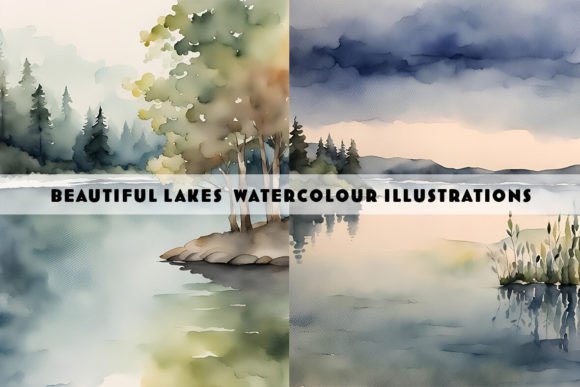
Beautiful Lakes Watercolour Duo: An Embroidery Review
When evaluating a new machine embroidery design for professional or commercial use, my first question is never about the digital preview. It is always about how the artwork translates from screen to fabric. As a designer who creates products for both personal clients and retail sales, I approach the Beautiful Lakes Watercolour Duo with a critical eye toward stitchability, marketability, and technical performance. This review breaks down exactly how this illustration set functions in real-world embroidery scenarios, moving beyond aesthetic appreciation to practical application.
Translating Watercolour Aesthetics to Thread
The immediate appeal of the Beautiful Lakes Watercolour Duo lies in its soft, organic mood. In the category of Illustrations, watercolour styles are notoriously difficult to digitize effectively because they rely on blending and transparency that thread cannot replicate. However, when reviewing this duo, the visual personality feels intentional rather than forced. The layout suggests a balanced composition that avoids the heavy, bulletproof density often associated with complex landscape designs.
For an embroidery project, this matters significantly. A design that mimics watercolour should utilize a mix of running stitch, light fill stitch, and strategic negative space. If the Beautiful Lakes Watercolour Duo relies too heavily on dense satin columns to create definition, it risks puckering lightweight fabrics and losing that signature airy feel. From a designer’s perspective, this artwork appears suited for projects where texture is as important as color. It evokes a sense of calm and nostalgia, making it naturally aligned with nursery decor, cottage-core apparel, and nature-inspired gifts rather than bold corporate branding or high-contrast sportswear.
Real-World Application: Stitching a Custom Tote Bag
To truly judge the viability of this embroidery file, I mentally walked through a recent client request: a custom canvas tote bag for a lakeside wedding favor. Canvas is unforgiving; it shows every tension issue and registration error. For this specific tote bag design application, the Beautiful Lakes Watercolour Duo offers distinct advantages and challenges.
The primary advantage is scale. Wedding favors require a design that looks substantial enough to be a keepsake but delicate enough not to overwhelm the utility of the bag. This duo likely provides options for placement that respect the bag's seams and handles. However, the challenge lies in stabilization. Because watercolour-style embroidery often uses lighter stitch density to achieve shading, you must pair it with the correct stabilizer. On unlined canvas, I would recommend a medium-weight cutaway to prevent the design from distorting during washing. If the design includes fine details like distant trees or ripples in the water, those elements need to remain crisp against the coarse fabric texture.
Furthermore, consider the production timeline. If you are an Etsy seller fulfilling twenty of these bags, stitch time is money. Watercolour illusions can sometimes be stitch-heavy. Before committing to a bulk order, run a timing test. If the Beautiful Lakes Watercolour Duo stitches out efficiently without sacrificing detail, it becomes a viable small shop product. If it requires excessive trims or slow speeds due to complex layering, it might be better reserved for premium-priced items rather than volume favors.
Navigating Fabric Limitations and Hoop Sizes
Not every substrate is a safe home for this type of artwork. While the Beautiful Lakes Watercolour Duo shines on stable woven fabrics like linen, cotton twill, and denim, caution is required elsewhere. I would hesitate to use this design on high-stretch performance wear or thin knits unless using a very robust stabilizer system. The fluid nature of watercolour digitizing means there are fewer structural anchor points than in traditional logo embroidery, making it more susceptible to distortion on stretchy materials.
Hoop size verification is another non-negotiable step. Always check the actual dimensions of the digital embroidery file before purchasing or stitching. Just because a design fits within your machine’s maximum field does not mean it will stitch well at that extreme. For the Beautiful Lakes Watercolour Duo, ensure you have adequate clearance around the design perimeter. Crowding the hoop edges leads to uneven tension and poor registration, which ruins the soft gradient effects essential to this style.
Additionally, consider curved surfaces. If you plan to adapt this as an embroidered patch or cap design, verify that the digitizer has accounted for curvature. Flat watercolour landscapes often warp when wrapped around a hat brim. For caps, you may need to resize or reposition elements of the duo to maintain visual integrity. Similarly, for baby embroidery on onesies or bibs, ensure the design does not contain rough backing or excessive jump stitches that could irritate sensitive skin. Softness in appearance must equal softness in tactile experience.
Commercial Viability and Brand Consistency
For creative entrepreneurs and makers, the value of an embroidery asset extends beyond a single project. Does the Beautiful Lakes Watercolour Duo offer versatility? A strong design set allows for cohesive branding across multiple SKUs. I can envision this duo working beautifully across a seasonal collection: sweatshirts for autumn lake trips, tea towels for summer hosts, and ornaments for holiday gifts. This consistency builds brand recognition and customer trust.
When listing finished items online, presentation is paramount. Use the design assets to create accurate printable mockups or digital previews. Customers need to see how the watercolour effect renders in thread versus ink. Be transparent in your listings. If the custom apparel features a stylized interpretation rather than a photorealistic print, state that clearly. Managing expectations reduces returns and increases satisfaction.
Crucially, review the licensing terms associated with this commercial embroidery asset. Can you sell the physical embroidered products? Can you use the image for marketing? Are there limits on production quantity? Never assume rights based on price alone. Protecting your business means respecting intellectual property while ensuring you have the legal freedom to profit from your craftsmanship.
Essential Designer Notes for Success
Before loading the Beautiful Lakes Watercolour Duo into your machine for a final product, adhere to this professional checklist:
- Test on Scrap Fabric First: Never risk a finished garment. Stitch the design on the exact fabric and stabilizer combination you intend to use. Check for registration shifts, especially in detailed areas.
- Evaluate Thread Color Contrast: Watercolour designs rely on subtle tonal shifts. Test your thread colors under natural and artificial lighting. What looks distinct on screen may blend into a muddy mess on fabric if the values are too similar.
- Inspect Stitch Density: Feel the back of your test swatch. Is it stiff? Does it drape? If the area is too dense for a sweatshirt embroidery placement, consider reducing density slightly or using a lighter weight thread.
- Check Small Details: Zoom in on the smallest elements. Are tiny lettering or fine lines legible? If details disappear after stitching, they serve no purpose and only add frustration. Edit them out if necessary.
- Verify Washability: If creating a kitchen towel or baby item, wash and dry the test sample aggressively. Ensure the design holds up to the intended lifecycle of the handmade product.
- Mockup Validation: Create black and white mockups to test value contrast independent of color. This ensures the design reads clearly even in monochromatic applications.
The Beautiful Lakes Watercolour Duo represents a promising asset for makers seeking to elevate their inventory with artistic, nature-inspired themes. By approaching it with technical discipline and realistic expectations, you can transform a beautiful digital illustration into a profitable, high-quality embroidered reality. Remember that successful embroidery is a marriage of art and engineering; let your process reflect both.